
NIMBYism affects more than data centers. Community opposition to economic development projects also reaches manufacturing, logistics and office development.
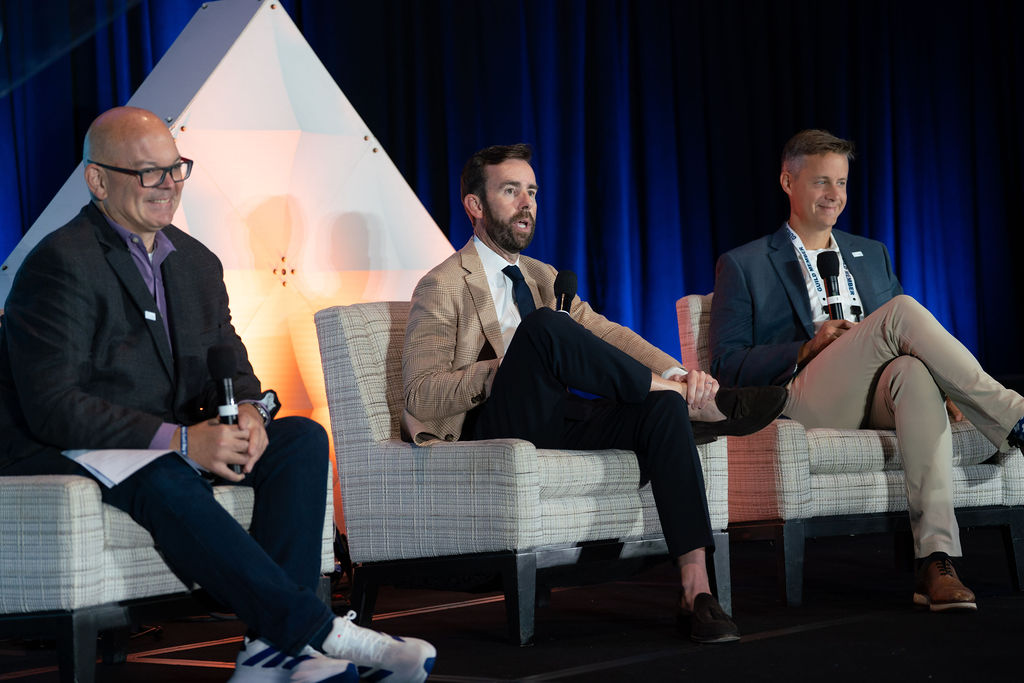
Larry Gigerich of Ginovus made this clear when describing an office project considering property zoned for office and planned for office use for 20 years. An online petition against it drew 200 signatures overnight, demonstrating increasingly rapid reactions from communities. It was all part of a conversation Gigerich moderated with Chris Lloyd of McGuireWoods Consulting and John Longshore of Brasfield & Gorrie at the Site Selectors Guild’s 2026 Fall Forum in Cleveland.
Public opinion toward economic development ranks among the top factors influencing site selection decisions, at 46%, according to the 2026 State of Site Selection report from the Guild and Development Counsellors International (DCI). DCI’s Robyn Domber noted that public opinion has become a more significant factor compared with a year ago.
Below, we examine why community opposition is growing and what economic developers can learn from Rivian’s Georgia project. We then outline a communications playbook for building trust before, during and after a project announcement, explain how to communicate the advantages of economic development and share the panel’s advice for handling disagreement.
What Is the NIMBY Syndrome, and Why Is Community Opposition Growing?
NIMBYism, short for “not in my backyard,” describes local resistance to development near people’s homes. Residents typically oppose projects over traffic, noise, water, property values and the feeling of being surprised by an announcement. Opposition can spread quickly through online organizing and reflects residents’ concerns about daily life as well as a project’s economic effects.
National conversations against data centers are spreading to manufacturing, distribution and logistics projects, according to Lloyd. Gigerich said about 10 years ago, roughly 85% of elected officials saw economic development as a good thing for communities. Today, the emotional side matters just as much, so developers also need to show how a project benefits families.
Longshore said enthusiasm for a project can keep economic developers from seeing what could go wrong. His recommendation was to keep a skeptic on the team to identify likely concerns before they become public opposition, particularly when digital and social media can spread objections quickly.
What Can Rivian’s Georgia Project Teach Economic Developers About Community Opposition?
Rivian’s Georgia plant underscores how fierce community opposition can escalate into a prolonged legal battle, with opponents challenging project financing and land use. For economic developers, early stakeholder engagement, open communication and meticulous permitting are essential preparation, not optional steps.
When Rivian announced a $5 billion EV plant expected to create 7,500 jobs, residents raised concerns about transparency, traffic and water at early public meetings. A judge denied bond validation in September 2022, and the bonds were validated in August 2023 after appeals. Rivian broke ground in September 2025, and by August 2026 crews were excavating foundations for the plant.
The panel presented the case as a lesson in preparation, not a verdict on anyone involved. They said the Joint Development Authority responded to the backlash by creating a stakeholder planning committee to directly address the concerns the community had raised. Their advice for economic developers was to bring stakeholders to the table from day one, expect delays, plan for political transitions, get permitting right and keep backup plans B, C and D.
Lloyd added that residents often see vacant land and assume it will stay that way. He recommended making intended land uses visible through proactive communication like site signs and the comprehensive plan so residents know what may be developed before a specific project is announced.
How Can Economic Developers Overcome NIMBYism Before, During and After a Project?
Economic developers can address NIMBYism by building community trust throughout the planning process: make intended land uses and zoning clear before a project, prepare a written communications playbook during evaluation and provide regular updates after announcement. Community involvement works best as a partnership. It is fair to expect companies to invest in the community as a corporate citizen, but the panel cautioned against transactional demands, such as required donations to specific groups.
Before the project
Lloyd and Gigerich suggested posting site signs to illustrate future use and zoning. Having no zoning may seem to give a rural county flexibility, but Gigerich said it can create more opposition, not less.
Lloyd also recommended that economic developers hold open office hours and visit civic clubs to explain how local government finances work. Gigerich emphasized listening first and asking questions before presenting a project so the team understands residents’ concerns. That listening can begin before formal public hearings.
During evaluation
Economic developers should have a communications playbook ready when the company has narrowed its options to three or four finalist locations. The playbook needs a written timeline, named contacts, a spokesperson and backup plans B, C and D. Lloyd recommended involving elected officials and local brokers because they are among those most likely to share news early. He also expects states to consider bans on nondisclosure agreements in economic development in 2027 and urged the profession to determine what information truly needs to remain confidential.
After the announcement
After the project announcement, address residents’ questions about increased traffic, noise, water and stormwater, and update utility figures as project designs change. Name one community point of contact and provide regular updates so residents know where to ask questions and find current information. Recognize the people and organizations that helped move the project forward.
What Are the Advantages of Economic Development for Residents?
The advantages of economic development for residents can include better-funded public services and improvements to quality of life, alongside new jobs. Explaining those benefits in terms of daily life helps residents understand what a project could mean for their community.
Lloyd suggested storytelling that focuses on the community’s quality of life. Highlight new schools, rescue services, parks, childcare and scholarships supported by development projects.
Trust also carries economic weight. A 2021 Deloitte Insights article cites a meta-analysis finding that a 10-percentage-point increase in the share of trusting people within a country should raise annual per capita real GDP growth by about 0.5 percentage point. The finding is country-level, but it shows why trust is worth building.
Local research can make the benefits of economic development more concrete. A 2026 University of South Carolina study of Charleston County Economic Development found that activity supported through its efforts generates $123.1 million in annual county revenue, a return of $10.88 for every $1 invested in the department. The study also reported that directly created jobs pay an average of $111,692, a 63% premium over the countywide average.
How Should Economic Developers Handle Disagreement With Residents, Clients and Partners?
Disagreements lead to solutions when economic developers give residents a chance to be heard, share clear facts and are direct with clients and partners.
With Residents
The panel said residents should have a chance to vent their concerns, and that a little grace goes a long way. Gigerich added that some critics cannot be won over. Instead of confronting them, focus on explaining why a site was chosen so the persuadable majority sees the full picture.
With Clients and Partners
Companies can cause friction by changing priorities and schedules, so ask for the deadline and the reason behind it. Asking when production needs to start, then working backward, helps set realistic expectations and avoids chasing a moving target. Routing communication through one project manager keeps the message consistent.
The panel said companies used to be able to show up, describe themselves and win. Projects now have to engage the community and be honest about what they are building. Longshore noted that a hyperscale data center can no longer be described as a standard industrial operation and expect to gain support, or more critically, maintain any gained support when the detail of the operation is revealed.
Turning Opposition Into Trust: Next Steps for EDOs
Opposition is useful planning input, not a surprise. Economic developers who build trust before, during and after the announcement move projects forward more efficiently. Start with these steps:
- Make intended land uses and zoning visible before a project is announced.
- Hold open office hours and explain how local government finances work.
- Write a communications playbook with named contacts, a spokesperson and backup plans.
- Name one community point of contact and share regular updates after announcement.
- Explain benefits in terms of daily life, such as schools, parks and services.
Sign up for the Guild’s e-newsletter to stay on top of current practices.